

Luxury in aviation has long been defined by hardware. Wider seats, larger screens, heavier cutlery or more expensive champagne. For decades this has been the industry’s shorthand for what it means to fly in style. The formula has been simple. The more money you spend, the more “stuff” you are given.

But step into the world of hospitality today and the rules have already changed. Luxury hotels and resorts no longer compete on chandeliers or thread count. These things are expected, even taken for granted. Instead, the most admired names in hospitality are now crafting experiences that are rooted in place, designed to linger long after check-out. The best properties understand that luxury is not just about indulgence, it is about enrichment. A guest does not return home and tell their friends about the marble lobby. They remember the story behind a ritual, a meal, a moment of connection.
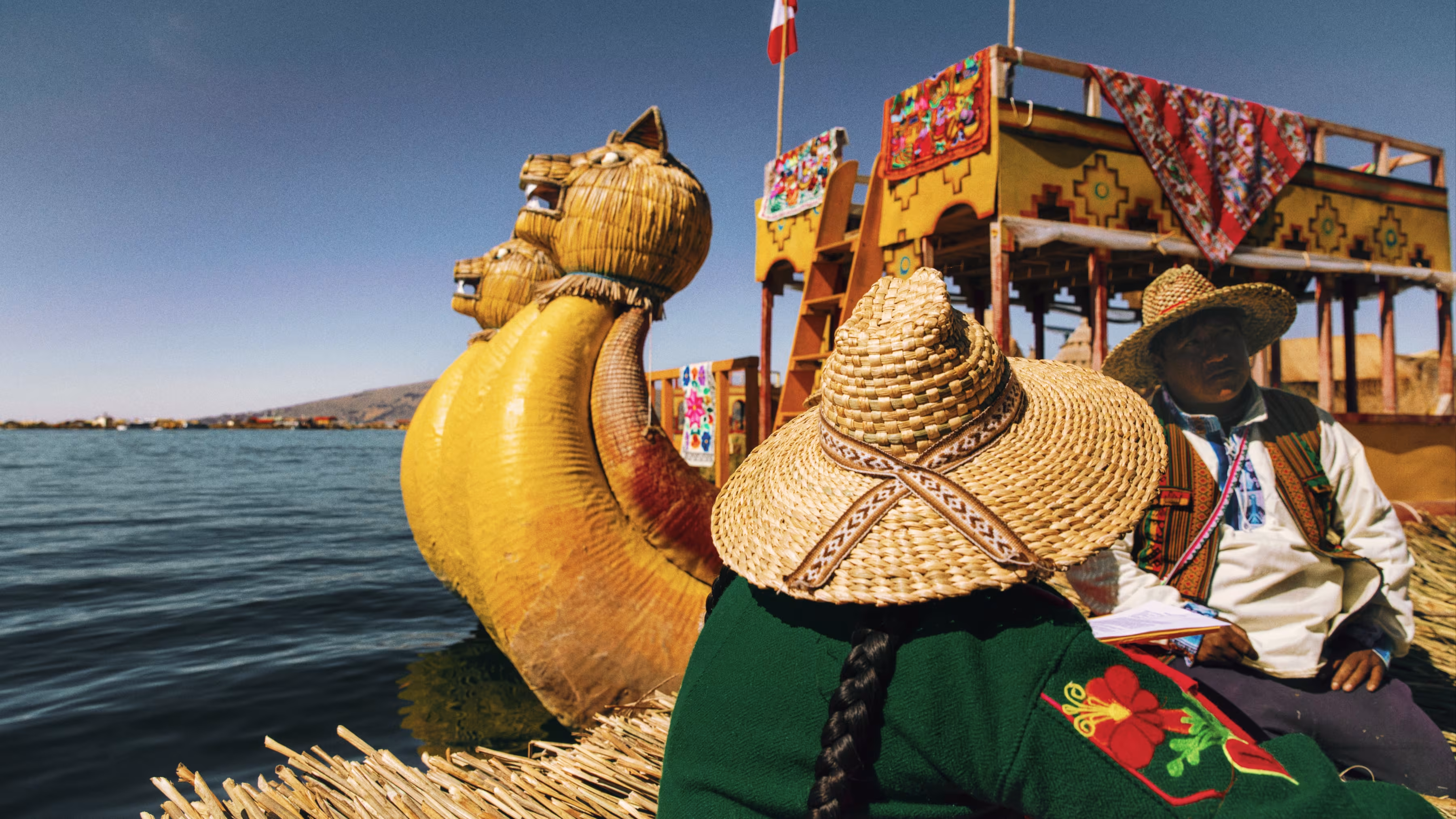
At the top end of the market this shift is unmistakable. Aman creates guided journeys into landscapes with community hosts. Six Senses works with local healers to weave indigenous traditions into spa programmes. Belmond turns the simple act of travel into theatre, from the Andean Explorer to the Venice Simplon-Orient-Express, where every detail of the journey feels curated. Even mainstream players have adopted the same philosophy. Accor’s MGallery hotels embed local legends into their storytelling, while Rosewood’s “A Sense of Place” mantra ensures each property is inseparable from its location. The message is clear. The true measure of luxury is not material but experiential.
Airlines by contrast are still caught in what might be called the comfort trap. Of course, the basics matter. Safety, punctuality and reliability will always be fundamental. But when it comes to what airlines themselves define as luxury, the emphasis remains stubbornly on the tangible. The size of the suite, the rarity of the champagne, the brand on the amenity kit. Lounges, even the most exclusive, have a frustrating sameness. A champagne bar here, a buffet there, a few zones with different seating, but rarely anything that genuinely sparks wonder or curiosity.

There are some standouts, and they prove just how powerful a more experiential approach can be. Singapore Airlines’ long-running Book the Cook programme allows premium passengers to pre-select dishes crafted by an international roster of chefs. It is a nod to culinary personalisation that has since been imitated but rarely equalled. Turkish Airlines has taken the chef concept literally, with toques in the cabin and dishes plated with a theatrical flourish. Emirates has been experimenting with wine programmes that stretch far beyond the usual inflight list, leaning into the storytelling behind vintages.

These initiatives are commendable, but they are still the exception rather than the rule, and often feel like embellishments rather than the spine of an airline’s identity. Too many carriers treat cultural or experiential gestures as add-ons, easily stripped away in cost-cutting cycles. Compare that to hospitality, where experiential programming is now the core proposition. A Six Senses property without indigenous wellness would feel unthinkable. An Aman resort without curated journeys would feel hollow. For airlines, the challenge is to move beyond token gestures and weave authentic experience into the brand’s DNA.

The opportunities are endless. In Japan, a First Class lounge could host a Michelin-starred sushi counter where a master Itamae prepares omakase for travellers before their journey. Not just nourishment but an unfolding ritual that frames the flight ahead. In Sri Lanka, a lounge that embraces Ayurvedic traditions could transform transits into restorative experiences, guided by principles that have defined the nation’s culture for centuries. Mexico, a country whose luxury resorts already celebrate shaman-led rituals, could extend that into an airline lounge, offering passengers a moment of guided renewal before departure.


In Europe, where viticulture is heritage, inflight wine tasting could be elevated from a functional pour to a curated experience where stories of terroir, winemaking and region are shared sip by sip. It is also why I have long been an advocate for social spaces in the sky. Virgin Atlantic’s onboard bar, for instance, remains one of the most memorable aspects of its Upper Class experience. It is exactly the kind of experiential element travellers crave, and one that would likely drive more revenue per ticket than the handful of seats stripped out to make space for it.
And then there is perhaps the most overlooked touchpoint of all. The amenity kit. For years airlines have ceded one of their most intimate passenger interactions to luxury brands. Kits have become a marketing platform, a neat way to say “look, we have partnered with Ferragamo, Diptyque or Rimowa.” While this lends a certain badge value, the contents rarely move beyond the utilitarian. A toothbrush, an eye mask, a miniature lotion. Useful, yes. Memorable, almost never.

There are glimmers of what this could be. KLM’s Delft Blue miniature houses are iconic, collected obsessively and instantly evocative of Dutch heritage. Etihad has begun giving premium passengers coffee cups that celebrate new routes, items that live on long after the flight. But why stop there. LATAM could embrace South America’s coffee heritage with a Nespresso kit featuring regional blends, offering passengers a literal taste of terroir to take home. TAP could gift ceramic tiles inspired by Portugal’s azulejos, each one a fragment of national design culture. A Japanese airline could offer furoshiki cloths, rich in cultural symbolism and endlessly reusable. These are not trinkets. They are talismans, souvenirs that anchor memory and extend the brand into the traveller’s daily life.

And then there are the nickable parts of the passenger experience. Those small, often unofficial souvenirs that travellers cannot resist. Virgin Atlantic’s iconic Wilbur and Orville salt and pepper pots, cheekily inscribed with “Pinched from Virgin Atlantic,” have become a cult favourite. Etihad has produced elegant Giorgio Armani salt and pepper shakers that many passengers have quietly spirited away in their hand luggage (including me). These items prove something important. Passengers value the physical reminders of a journey, even if they are not expressly meant to be taken.

So why not embrace this instinct and build it into the brand. Imagine if Finnair handed out its famous Iittala Ultima Thule glasses as a keepsake at the end of a long-haul flight, a design that already carries deep Finnish heritage. Or if Qatar Airways or Turkish Airlines gifted candle holders etched with unique silhouettes that reflected their cultural motifs. Japan Airlines could offer a miniature chopstick jet, a playful yet practical memento that passengers could actually use at home. These kinds of items would transform what is often a guilty pleasure into a meaningful extension of the brand story. Objects that live on long after the journey, sparking conversation and reminding travellers of the airline every time they are used.
Hotels have long understood the power of this approach. Guests at Six Senses often return home with mementos linked to their wellness journey. Aman is known for small, thoughtful gifts that capture the essence of a destination. For airlines, both amenity kits and these collectible details should play the same role. Not a token of brand collaboration but an artefact of cultural storytelling.

The reality is that the basics of premium travel are no longer differentiators. Lie-flat seats are table stakes. Wi-Fi is expected. Amenity kits, however luxurious, end up forgotten unless they carry meaning. What truly resonates is a sense of story. The feeling that a journey offered something that no other carrier could. Hospitality has already proven the power of this approach. The memory of a sunrise yoga class in Bali or a chef-led foraging trip in Scandinavia lasts infinitely longer than the recollection of thread count or bathroom fittings.
Airlines are uniquely positioned to take this baton. They are, by nature, cultural ambassadors. They bring people to places, carry the essence of their home nation, and have the ability to showcase identity in ways no other industry can. But for this to work, experiences need to be more than marketing flourishes. They need to be built into the brand ethos. A Japanese airline should always feel like Japan. A Sri Lankan airline should always feel like Sri Lanka. Not in the superficial design of an amenity kit, but in the spirit of the journey itself.

The next wave of luxury in aviation will not be defined by who has the biggest suite or the most expensive wine list. Those battles matter, but they are battles of parity. What will matter more is the willingness of airlines to treat their product less as a cabin and more as a stage for cultural expression. To stop thinking of lounges as waiting rooms and start imagining them as portals. To see service not as a checklist but as a performance, crafted to leave an emotional impression.
If hotels can transform a night’s stay into a story, airlines can do the same with a twelve-hour flight. They just need to stop chasing the trappings of luxury and start embracing its meaning.
Because the future of airline luxury will not be measured in inches of pitch or ounces of caviar. It will be measured in the rituals passengers remember, the flavours they discover, and the sense of connection they carry with them long after they have landed. If you want to continue the conversation with me directly, reach out!
As I do every year, I ask on your kind support to keep things going. If you are able to donate – whatever amount – it all gets funnelled back in to the site, to keep the site full of content. And I thank you personally for your kind support.
Discover more from TheDesignAir
Subscribe to get the latest posts sent to your email.

what an intricately beautiful article. Truly exceptional. Kudos.